

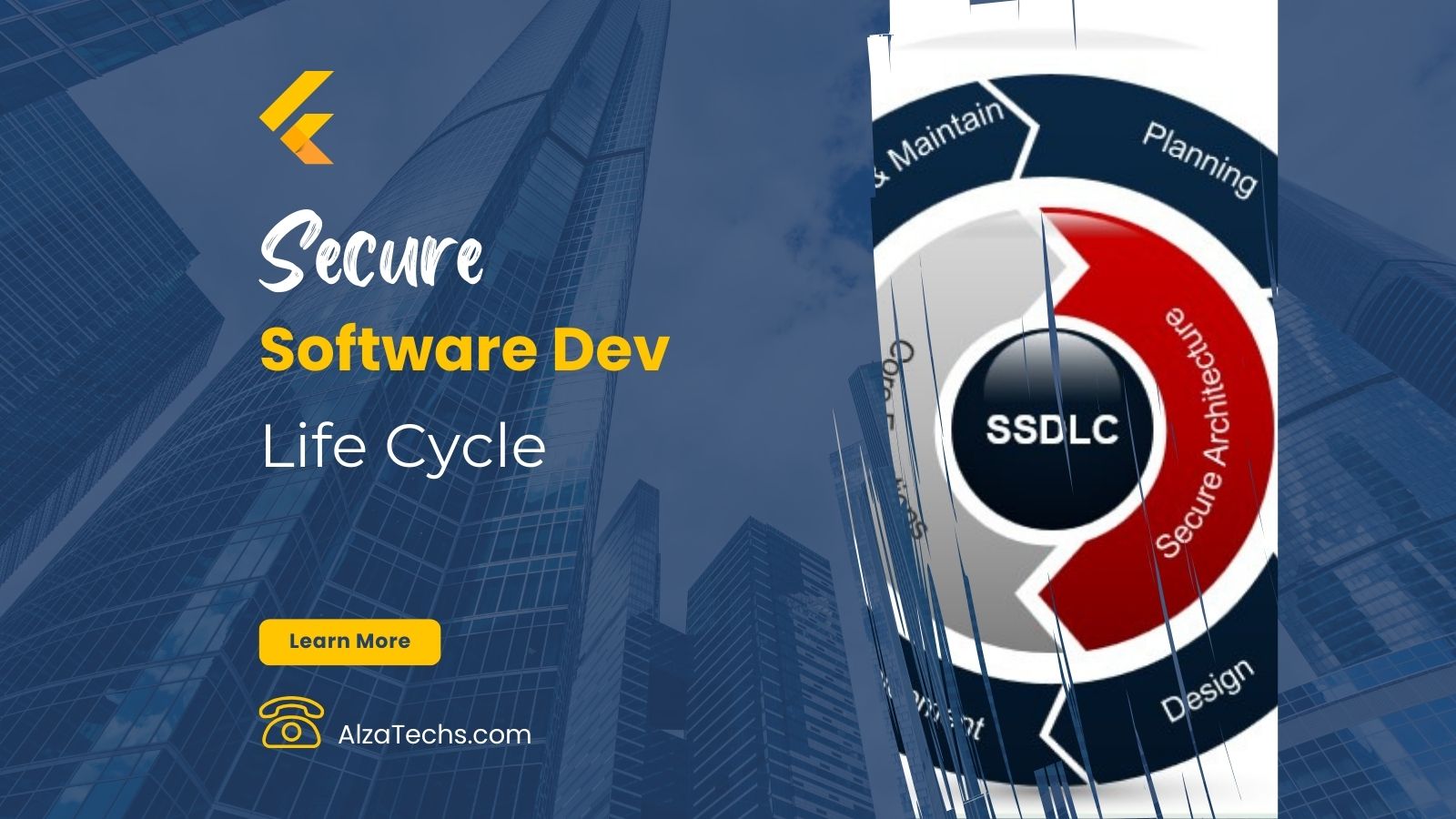
Secure Software Development Life Cycle
Building Strong Applications: Secure Software Development Life Cycle
The Secure Software Development Life Cycle (SSDLC) is a framework including security into every stage of software development. Ensuring software security has never been more important given the increasing cyberthreats. This post will explore the SSDLC in great detail, including data, hacks, and insightful analysis to enable you to properly use it.
What is the Secure Software Development Life Cycle?

The Secure Software Development Life Cycle (SSDLC) is a process whereby security techniques are included into every phase of software development. Whereas the conventional Software Development Life Cycle (SDLC) stresses performance and functionality, SSDLC stresses security from design to implementation and maintenance.
The Importance of SSDLC
Threats in cybersecurity are developing. Cybersecurity Ventures’ 2023 estimate shows that by 2025 cybercrime damages are expected to exceed $10.5 trillion yearly. Businesses in this context have to use SSDLC to guard their apps against data leaks and vulnerabilities.
Phases of the SSDLC
1. Requirements and Planning:
Add Security Needs: Early on, list security requirements. Project possible weaknesses using threat modelling. During this phase, include security professionals to prevent later expensive redesigns.
| Requirement | Description | Examples/Actions |
|---|---|---|
| Security Requirements Identification | Define project-specific security needs. | Conduct security needs assessment, align with business requirements. |
| Threat Modeling | Analyze potential threats and vulnerabilities. | Use tools like Microsoft Threat Modeling Tool, create data flow diagrams. |
| Risk Assessment | Evaluate risks of identified threats. | Perform risk analysis, prioritize risks based on impact. |
| Security Policy Development | Establish security policies for the development process. | Draft security policies and procedures, cover data handling and user access. |
| Compliance Requirements | Identify legal and regulatory requirements. | Review laws and regulations, ensure project alignment with standards like GDPR, HIPAA. |
| Security Requirements Documentation | Document security requirements clearly. | Create a requirements specification document, use clear language. |
| Stakeholder Involvement | Engage stakeholders to align security with business goals. | Organize meetings, gather input from business, legal, and technical teams. |
| Baseline Security Controls | Establish minimum security standards. | Define baseline security controls, integrate into planning. |
| Feasibility Analysis | Assess feasibility of implementing security requirements. | Conduct feasibility studies, adjust based on findings. |
| Security Metrics Definition | Define metrics to measure security effectiveness. | Establish KPIs for security, set up tracking and reporting. |
| Resource Allocation | Determine resources needed for security. | Allocate budget, assign roles and responsibilities. |
| Training and Awareness | Plan training for secure development practices. | Schedule training sessions, provide resources on secure coding. |
| Tool Selection and Integration | Choose and integrate security tools. | Evaluate tools, plan integration. |
| Baseline Documentation | Create initial security documentation. | Compile a comprehensive security plan, ensure accessibility. |
| Planning for Security Reviews | Schedule regular security reviews. | Define review intervals, plan milestone-based assessments. |
2. Design:
Architect securely: Select safe designs and architectural styles.
An example hack is: Apply least privilege to guarantee that parts have the lowest access required for operation.
- Conduct Threat Modeling
- Apply Security Design Principles
- Ensure Secure Coding Practices
- Perform Architectural Risk Assessment
- Align with Compliance and Standards
- Evaluate Tools and Technologies
- Document Design Decisions
- Incorporate Secure Design Patterns
- Plan for Scalability and Flexibility
- Implement Automated Security Testing
These points summarize the key actions and considerations for selecting safe designs and architectural styles in the Secure Software Development Life Cycle (SSDLC).
3. Improvement:
Use best practices and codes for security: Look for weaknesses using instruments like stationary analysis. One example hack is including code review tools into the CI/CD process to find problems early on.
Best Practices To Improve Secure Software Development Life Cycle
- Adopt Secure Coding Standards
- Use Code Analysis Tools
- Perform Regular Code Reviews
- Implement Input Validation
- Apply Principle of Least Privilege
- Use Secure Libraries and Frameworks
- Encrypt Sensitive Data
- Avoid Hardcoding Secrets
- Sanitize User Inputs
- Implement Error Handling
- Conduct Threat Modeling
- Keep Dependencies Up-to-Dates
- Use Secure APIs
- Adopt Secure Authentication Methods
- Maintain Coding Guidelines Documentation
- Secure Configuration Management
- Implement Logging and Monitoring
- Use Automated Testing
- Practice Defense in Depth
4. Testing:
Perform thorough automated and manual penetration tests among other things.
Example hack: run random data into your program using fuzz testing to find unanticipated weaknesses.
The primary objective of SSDLC testing is to identify vulnerabilities prior to their escalation into a problem. Begin by utilizing static analysis tools to evaluate your code in order to identify any potential issues at an early stage. Afterward, employ Dynamic Testing to observe the behavior of your software in diverse real-world scenarios. Remember to conduct Interactive Testing to gain real-time security insights while your application is in operation.
Penetration testing is essential; consider it as a benign hacker attempting to gain access in order to expose your vulnerabilities. Finally, implement Fuzz Testing by introducing unexpected inputs into your application in order to identify concealed defects. Your software remains secure and robust through consistent testing.
5. Implementing:
Guarantee of a safe deployment: Verify the deployment technique. This covers encrypting using safe channels. Automate security checks included into deployment scripts to enforce compliance.
In SSDLC, implementation is about building security into your software right from the start. Use secure coding practices to avoid common vulnerabilities and integrate security tools like static analyzers directly into your development environment. This helps catch issues as you code. Regular code reviews are essential—pair up with peers to spot any overlooked weaknesses. Don’t skip automating security checks in your CI/CD pipeline; it’s like having a safety net to catch issues before they reach production. Stay proactive, keep up with security updates, and ensure your implementation is resilient against potential threats.
6. Maintenance:
Software should be kept current and new hazards should be constantly under observation.
Using an incident response strategy will help you to rapidly handle and minimize any security breaches.
Maintaining Software Developed in the SSDLC Process
- Continuous Monitoring: Regularly track application performance and security metrics.
- Apply Security Patches: Promptly update software with security patches and updates.
- Regular Vulnerability Scans: Use automated tools to identify new vulnerabilities.
- Incident Response Plan: Maintain a plan to address and mitigate security incidents quickly.
- Log Analysis: Regularly review logs for unusual activity or potential security breaches.
- Periodic Penetration Testing: Conduct regular penetration tests to find new security weaknesses.
- Update Documentation: Keep security and maintenance documentation up to date.
- User Access Reviews: Periodically review and adjust user access permissions.
- Backup and Recovery: Ensure robust backup procedures and test recovery processes regularly.
- Compliance Audits: Perform regular audits to ensure compliance with relevant security standards and regulations.
- Security Training: Provide ongoing security training for the team to stay updated on best practices.
- Code Refactoring: Periodically refactor code to improve security and maintainability.
Key Benefits of Secure Software Development Life Cycle
1. Reduced Cost
Early security addressed in the development process is far less expensive than post-deployment fixes, key benefits of SSDLC. Fixing a security flaw following deployment can be up to thirty times more costly than during development, according to the National Institute of Standards and Technology (NIST).
2. Enhanced Reputation:
Companies that give security top priority develop customer confidence. According to an IBM research, 78% of consumers are less likely to purchase from a company they know has been hacked.
3. Compliance:
Strict legal requirements abound in many sectors. Using SSDLC guarantees adherence to rules including GDPR, HIPAA, and CCPA.
Practical Tips for Implementing Secure Software Development Life Cycle
1. Educate Your Team:
First, teach your staff practical SSDLC tips. Share knowledge about safe coding techniques and the value of security throughout the development life.
Summary of Team Education Methods for SSDLC
| Method | Description | Examples/Actions |
|---|---|---|
| Formal Training | Structured courses and certifications on SSDLC. | Access to online courses and certifications (e.g., CSSLP). |
| Workshops and Hands-on Sessions | Interactive practical sessions on SSDLC concepts. | Workshops on secure coding, threat modeling. |
| On-the-Job Training | Learning through real project tasks. | Mentorship, assigning security tasks in projects. |
| Documentation and Guides | Manuals and guidelines on SSDLC. | Create SSDLC documentation and guides. |
| Security Tool Training | Training on specific SSDLC tools. | Training on tools like SonarQube, Burp Suite. |
| Simulation Exercises | Security incident practice drills. | Incident response simulations, analyzing outcomes. |
| Code Review and Peer Learning | Collaborative code review sessions. | Regular code review meetings, peer feedback. |
| Lunch and Learn Sessions | Informal security discussions. | Bi-weekly lunch and learn events covering various security topics. |
| Security News and Updates | Latest security trends and incidents. | Share newsletters, discuss recent breaches. |
| Continuous Learning Resources | Access to ongoing educational resources. | Subscriptions to publications, participation in webinars. |
| Gamification | Engaging and competitive learning. | Security challenges, hackathons, reward achievements. |
| Mentorship Programs | Pairing with experienced mentors. | Establish formal mentorship programs, track progress. |
| Feedback Loops | Regular feedback on security practices. | Collect and use feedback to update training programs. |
2. Use Security Tools:
Use tools for vulnerability scanning, dynamic analysis, and stationary analysis. These instruments can automatically find typical weaknesses.
Here’s a table summarizing the security tools used in various phases of the Secure Software Development Life Cycle (SSDLC):
| SSDLC Phase | Security Tool | Description |
|---|---|---|
| Planning & Requirements | Microsoft Threat Modeling Tool | Identifies and mitigates potential security issues during the design phase. |
| OWASP Threat Dragon | Open-source tool for threat modeling and analyzing security risks. | |
| Design | OWASP Application Security Verification Standard (ASVS) | Provides a framework for secure application design and testing. |
| NIST 800-53 | Guidelines for implementing secure design in federal systems. | |
| Development | SonarQube | Analyzes source code for vulnerabilities and code quality issues. |
| Checkmarx | Performs static analysis to detect vulnerabilities in the codebase. | |
| Snyk | Scans for vulnerabilities in open-source libraries and offers fixes. | |
| WhiteSource | Detects vulnerabilities and manages license compliance for open-source components. | |
| Testing | OWASP ZAP | Open-source tool for finding vulnerabilities in web applications. |
| Burp Suite | Comprehensive web application security testing tool, including automated scanning. | |
| Contrast Security | Integrates with applications to find vulnerabilities during runtime. | |
| Veracode IAST | Provides real-time insights into application vulnerabilities during testing. | |
| AFL (American Fuzzy Lop) | Fuzz testing tool for discovering vulnerabilities by inputting random data. | |
| Peach Fuzzer | Automates fuzz testing to identify weaknesses through unexpected data inputs. | |
| Deployment | Aqua Security | Secures containerized applications throughout their lifecycle. |
| Twistlock | Provides runtime protection and vulnerability management for containers. | |
| Terraform | Manages infrastructure securely by codifying cloud infrastructure. | |
| Prowler | Assesses and hardens AWS security best practices. | |
| Maintenance | Splunk | Monitors and analyzes machine data for security threats and operational insights. |
| ELK Stack (Elasticsearch, Logstash, Kibana) | Collects and visualizes log data for application security monitoring. | |
| Nessus | Conducts vulnerability scanning to identify security issues in applications and networks. | |
| Qualys | Provides continuous monitoring and alerts for potential vulnerabilities. | |
| General | GitLab CI/CD | Integrates security checks into the CI/CD pipeline to detect vulnerabilities early. |
| Jenkins with Security Plugins | Automates software building and testing with integrated security checks. | |
| Codacy | Automates code review with security checks integrated into development. | |
| ShiftLeft | Incorporates security insights into the development workflow, focusing on early vulnerability detection. |
3. Foster a Security Culture:
Encourage a security-first perspective among members of your development team. This covers ongoing debates on security best practices and lessons learnt from prior events.
Key Elements to Foster Security Culture in SSDLC
- Continuous Security Education: Security Awareness Programs
- Security Champions: Incentivize Security Best Practices
- Integrate Security into Processes: Embed Security in Workflows
Common Pitfalls and How to Avoid Them
1. Ignoring early phases: Ignoring early phases like planning and design and concentrating just on testing could leave security vulnerable.
2. Lack of Expertise: Ignoring security professionals might lead to control issues. Involve always someone with understanding of security in every stage.
3. Ignoring Post-Deployment: Security never finishes at deployment. Protection against developing hazards depends on constant monitoring and upgrades.
Why you should trust Alza Technologies to build your Software?

Selecting Alza Technologies to handle your software development guarantees a combination of knowledge, security, and creativity. Our staff is committed to provide you safe, premium software solutions catered to your company requirements. We secure your data and systems from developing hazards by including cutting-edge security measures all through the software development process. Our strong SSDLC architecture guarantees that industry best practices and modern tools strengthen every stage, from planning to deployment.
We take great satisfaction in keeping ahead of the curve and always changing our approaches to represent the most recent developments in security and technology. Clear communication, frequent updates, and a team approach help to show our dedication to customer success. Alza Technologies is a trustworthy partner who values your security and offers dependable, scalable, creative software solutions. Work with a team that prioritizes your needs and experience the confidence that results.
In summary,
Building strong, safe software depends mostly on the Secure Software Development Life Cycle. Including security techniques at every stage—from design to maintenance—you can greatly lower vulnerabilities and guard your programs against threats. Remember to teach your staff, apply appropriate tools, and build a security culture. Our attitude to software development has to change as cyberthreats change. Using SSDLC is not only a smart practice; it also helps to protect your software and reputation. Hope we have provided value, follow our LinkedIn page. It will help us with algorithm.